
3 Types of Retaining Walls
1/5/20244 min read
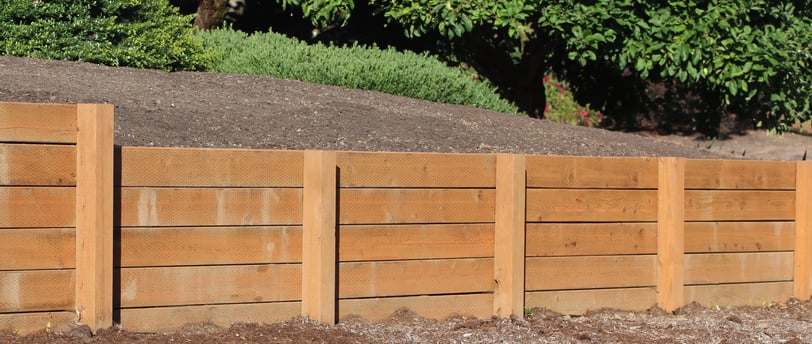
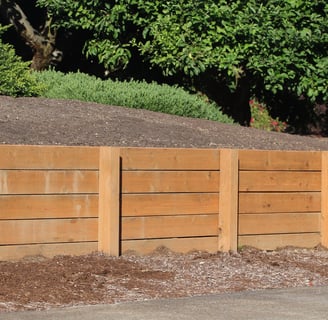
Wood Retaining Wall
Materials: Wood retaining walls are constructed using various types of wood, with pressure-treated lumber being a popular choice for its resistance to decay and insects. Other options include redwood or cedar, which offer natural resistance to decay and a more attractive appearance.
Design: The design of a wood retaining wall can vary based on factors such as the height of the wall, the slope of the terrain, and the desired aesthetic. Common designs include timber walls, where horizontal wooden planks are stacked and secured with vertical support posts.
Construction: Wood retaining walls are typically built by stacking horizontal wooden planks or timbers on top of each other. These planks are anchored into the ground with vertical support posts, creating a barrier to hold back soil. The posts are often set into the ground at intervals and may be anchored with concrete for stability.
Functionality: The primary function of a wood retaining wall is to prevent soil erosion and create a flat or terraced area on a slope. They are commonly used in landscaping to create usable spaces for gardens, patios, or pathways on uneven terrain.
Drainage: Proper drainage is crucial for the effectiveness and longevity of a wood retaining wall. Drainage materials, such as gravel or drainage pipes, may be incorporated behind the wall to allow water to drain away from the structure, preventing water buildup that could compromise the wall's integrity.
Appearance: Wood retaining walls provide a natural and warm appearance, blending well with outdoor environments. They can be left in their natural state or stained and sealed to enhance the wood's color and protect it from the elements.
Maintenance: Regular maintenance is essential to ensure the longevity of a wood retaining wall. This may include inspecting for signs of decay, repairing any damaged or rotted sections, and resealing or restaining the wood as needed.
Cost: The cost of a wood retaining wall can vary based on factors such as the type of wood used, the height and length of the wall, and the complexity of the design. While wood retaining walls are generally more cost-effective than some alternative materials, they may require more maintenance over time.
Concrete Block Retaining Wall
Materials: Block retaining walls are typically constructed using interlocking concrete blocks. These blocks may have various shapes, sizes, and textures, allowing for different aesthetic designs. Some blocks are designed to resemble natural stone or other materials.
Design: The design of a block retaining wall involves arranging interlocking blocks in a way that provides stability and strength. The blocks often have a lip or groove system that allows them to fit together securely, creating a solid structure.
Construction: Block retaining walls are built by stacking the interlocking blocks on top of each other. The blocks are arranged in a staggered pattern to enhance stability. The wall is often reinforced with geogrid or other materials to add strength and prevent bulging.
Functionality: The primary function of a block retaining wall is to hold back soil and create level or terraced areas on sloped landscapes. These walls are used to prevent erosion, stabilize embankments, and create usable spaces for gardens, patios, or walkways.
Drainage: Proper drainage is essential for the effectiveness of a block retaining wall. Drainage materials, such as gravel or perforated pipes, may be installed behind the wall to allow water to drain away. This helps prevent water buildup behind the wall, which could lead to instability.
Appearance: Block retaining walls offer a versatile and aesthetically pleasing appearance. The variety of block styles, colors, and textures allows for customization to complement the overall design of the landscape. Some blocks are designed to mimic the appearance of natural stone or other materials.
Maintenance: Block retaining walls generally require minimal maintenance. Regular inspection for any signs of movement, settlement, or damage is recommended. Cleaning the blocks to remove dirt or vegetation and addressing any minor issues promptly can help ensure the longevity of the wall.
Cost: The cost of a block retaining wall can vary based on factors such as the type of blocks used, the height and length of the wall, and the complexity of the design. While block retaining walls may have a higher upfront cost compared to some other materials, their durability and low maintenance requirements can make them a cost-effective choice over time.
Poured Concrete Wall
Materials: Poured concrete retaining walls are made primarily of concrete, a mixture of cement, aggregates (such as sand and gravel), and water. Reinforcement materials, such as steel rebar, may be added to increase the wall's strength and resistance to cracking.
Design: The design of a poured concrete retaining wall involves planning the dimensions, thickness, and reinforcement needed for the specific site conditions. Engineers often calculate these parameters to ensure the structural integrity of the wall.
Construction: The construction of a poured concrete retaining wall begins by creating forms or molds that define the shape and dimensions of the wall. The liquid concrete is then poured into these forms and allowed to cure and harden. The forms are later removed, leaving a solid, continuous wall.
Functionality: Poured concrete retaining walls are designed to hold back soil and provide structural stability to sloped areas. They are commonly used in various applications, including landscaping, highway construction, and residential developments, to prevent erosion and create level spaces on uneven terrain.
Appearance: Poured concrete retaining walls have a clean and simple appearance. While they may lack the textured or decorative finishes of other materials, such as stone or brick, they can be left as is or finished with coatings or stains for a more aesthetically pleasing look.
Drainage: Proper drainage is crucial for the effectiveness of poured concrete retaining walls. Drainage features, such as weep holes or drainage pipes, may be incorporated into the wall to prevent water buildup behind it, reducing the risk of hydrostatic pressure and potential damage.
Reinforcement: Depending on the height and load-bearing requirements, poured concrete retaining walls may be reinforced with steel rebar. Reinforcement helps distribute the forces and stresses more evenly throughout the structure, enhancing its overall strength and durability.
Maintenance: Poured concrete retaining walls generally require minimal maintenance. Periodic inspections for cracks, settling, or other signs of wear are recommended. Any necessary repairs should be addressed promptly to maintain the wall's structural integrity.
Cost: The cost of a poured concrete retaining wall can vary based on factors such as the wall's height, length, and design complexity. While the initial cost may be higher than some other materials, the durability and longevity of poured concrete walls can make them a cost-effective choice over time.